
Staying connected while traveling has become an important part of modern travel. From checking maps and booking transportation to sharing photos and keeping in touch with family, reliable mobile data can make a trip much easier. Nomad eSIM is a digital connectivity service designed to help international travelers access mobile data without purchasing a physical SIM card or relying entirely on their home carrier’s roaming service.
This Nomad eSIM review explores how the service works, its United States data plans, international coverage, activation process, and key features. It also highlights practical considerations travelers should understand before choosing a plan.
What Is Nomad eSIM?
Nomad eSIM is a travel connectivity platform that provides prepaid mobile data through embedded SIM technology. Instead of inserting a traditional SIM card, users download a digital SIM profile onto a compatible smartphone and connect to supported mobile networks at their destination.
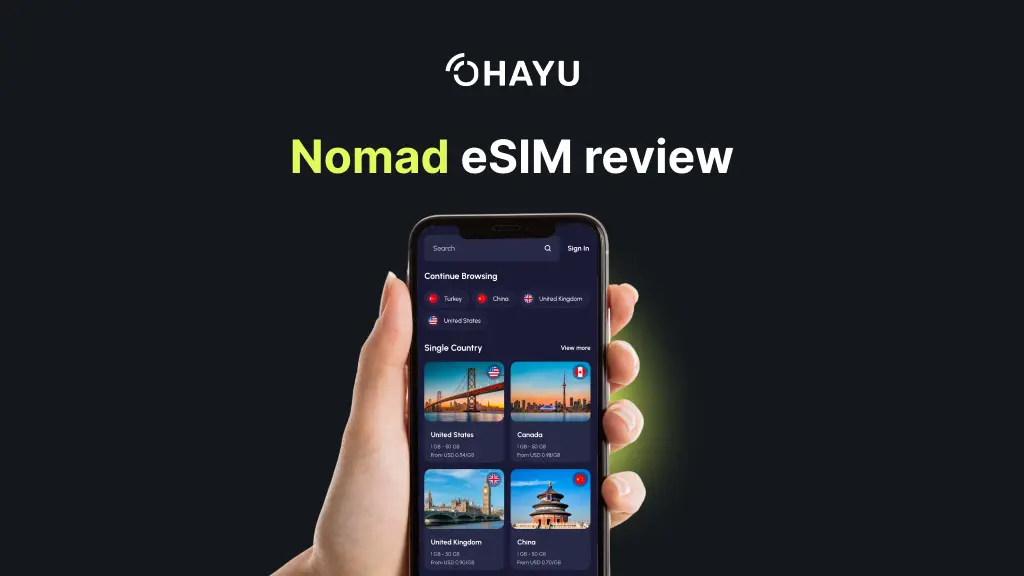
The service is designed for travelers visiting individual countries or multiple destinations. Users can browse available plans online or through the Nomad app, select a data allowance and validity period, and install the eSIM before departure.
Nomad offers country-specific, regional, and global plans. This range can be useful for people taking short holidays, longer international trips, business journeys, or multi-country vacations.
One important distinction is that most Nomad travel eSIM plans are data-only. They generally do not provide a traditional local phone number or standard voice and SMS services, although certain destination-specific plans may have additional features.
Nomad eSIM Plans for the United States
For travelers visiting the United States, Nomad provides prepaid data packages with different allowances and validity periods. These options are designed for different usage patterns, from occasional browsing to frequent navigation, video streaming, and online communication.
Available plan options displayed on Nomad’s US travel eSIM page include:
| Data Allowance | Validity | Displayed Price |
|---|---|---|
| 1 GB | 7 days | $5 |
| 3 GB | 30 days | $10 |
| 5 GB | 30 days | $16 |
| 10 GB | 30 days | $25 |
| 20 GB | 30 days | $36 |
| 50 GB | 30 days | $41 |
| 75 GB | 180 days | $89 |
| 100 GB | 365 days | $120 |
Nomad also lists daily high-speed data options for travelers who prefer a plan structured around the number of travel days. Prices and availability can change, so the figures above should be treated as a reference rather than a guaranteed quotation.
The appropriate plan depends on how someone expects to use their phone. Travelers who mainly need maps, messaging, and occasional searches may prefer a smaller package. Those who regularly upload photos, watch videos, or use their phones as mobile hotspots may need a larger allowance.
Before purchasing, users should compare the data amount, validity period, network details, and any speed restrictions associated with the selected package.
International Coverage and Network Connectivity
Nomad offers eSIM plans for individual destinations as well as regional and global travel. This structure allows users to compare plans based on where they are going rather than purchasing a separate physical SIM card in every country.
For the United States, Nomad’s travel eSIM information identifies access to partner networks including T-Mobile, AT&T, and Verizon, depending on the specific plan. Supported connectivity may include 4G, LTE, and 5G.
Actual performance depends on several factors, including the local network partner, device compatibility, signal strength, network congestion, and geographic location. Coverage in major metropolitan areas may differ from connectivity in rural regions, national parks, or remote destinations.
Travelers visiting multiple countries should also examine regional packages. A North America plan, for example, may be more convenient for an itinerary involving the United States, Canada, and Mexico, provided the selected package includes all intended destinations.
Nomad’s United States eSIM page provides destination-specific plan information, while its eSIM shop allows users to explore other available destinations.
How Does Nomad eSIM Work?
The purchasing and installation process is digital, so travelers do not need to wait for a physical SIM card to arrive.
The general process involves four steps:
1. Check device compatibility
Before purchasing, confirm that the smartphone supports eSIM technology and is carrier-unlocked. Not every phone model or carrier configuration supports travel eSIM installation.
2. Choose a destination and data plan
Select the country, region, or global package that matches the travel itinerary. Review the data allowance, validity period, supported networks, and plan conditions before completing payment.
3. Install the eSIM
After purchasing, users receive installation instructions and can generally add the eSIM by scanning a QR code or using the Nomad app. An internet connection is required during installation, so completing this step before departure is usually convenient.
4. Connect at the destination
When arriving, users can enable the Nomad eSIM, select it for mobile data, and turn on data roaming for that line if required by the plan. The plan generally begins when the eSIM connects to a supported network, although some plans may have different activation instructions.
Nomad advises users to activate their purchased plans within 60 days. If a plan is not activated within that period, it may activate automatically and begin its validity period. Travelers should therefore check the applicable conditions before buying far in advance.
More detailed instructions are available in the Nomad eSIM Help Center.
Keeping Your Existing Phone Number
One useful feature of travel eSIM technology is the ability to keep an existing physical SIM active on compatible dual-SIM devices.
For example, a traveler from the United States visiting Europe may continue using their regular phone number for calls and text messages while selecting Nomad as the mobile data connection.
This can help maintain access to familiar communication services without physically removing the primary SIM card.
However, users should review their home carrier’s international roaming settings. Keeping a primary SIM active does not automatically prevent roaming charges. To reduce the risk of unexpected costs, travelers should configure mobile data to use the Nomad line and review roaming settings for their regular carrier.
Hotspot, Data Tracking, and Top-Ups
Nomad supports hotspot and tethering on its travel eSIM plans, allowing users to share mobile data with compatible laptops, tablets, and other devices. This can be useful for remote workers, business travelers, or people traveling with several personal devices.
Data usage can be monitored through the Nomad app. This makes it easier to check remaining allowances and estimate whether a plan will last for the rest of a trip.
Some plans also support add-on data purchases. When an eligible plan runs low, users may be able to purchase additional data for the existing eSIM without installing a completely new profile.
Unlimited plans may also have fair-use or high-speed data conditions. For example, certain plans provide a daily high-speed allowance before reducing connection speeds. The term “unlimited” should therefore be reviewed alongside the plan’s detailed speed policy.
Who Should Consider Nomad eSIM?
Nomad eSIM may be worth considering for several types of travelers:
- International tourists: People visiting the United States or other supported destinations who want mobile data without buying a local physical SIM.
- Frequent travelers: Users who regularly visit different countries and prefer managing connectivity through one app.
- Business travelers: Professionals who need mobile internet for email, navigation, messaging, and online meetings while away from their usual network.
- Remote workers: Travelers who use laptops or tablets and may benefit from hotspot functionality.
- Multi-country travelers: People visiting several destinations who want to compare regional or global data packages.
It may be less suitable for travelers who require a local phone number, extensive voice calling, or guaranteed coverage in remote locations. Those users should compare the available plan features with the requirements of their trip.
Important Things to Check Before Buying
Although eSIM services can simplify international connectivity, a few details deserve attention before purchasing.
First, device compatibility is essential. A phone that does not support eSIM or remains locked to a carrier may not be able to use the service.
Second, data-only plans may not meet every communication need. Travelers who require traditional calls or SMS should confirm whether the selected plan includes those services.
Third, coverage and speed are not identical everywhere. Local network availability, signal conditions, and congestion can affect the actual experience.
Finally, users should review validity periods, activation deadlines, data limits, add-on availability, and refund conditions. Understanding these details before departure can help avoid unexpected connectivity problems.
Final Thoughts on Nomad eSIM
Nomad eSIM provides a digital alternative to traditional travel SIM cards, with prepaid data packages for individual countries, regions, and international destinations. Its main features include digital installation, multiple data allowances, hotspot support, app-based usage monitoring, and add-on options on eligible plans.
For travelers visiting the United States, the service offers several package sizes and validity periods, making it possible to compare options according to trip length and expected data consumption.
Overall, Nomad eSIM is worth considering for people who want a convenient way to access mobile data while traveling. Checking device compatibility, network coverage, activation rules, and plan limitations remains important when deciding whether it is the right connectivity option for a particular trip.